

Choose the Right UX Map for Your Goal
Different UX maps serve different purposes, so teams should choose the format that matches their goal.
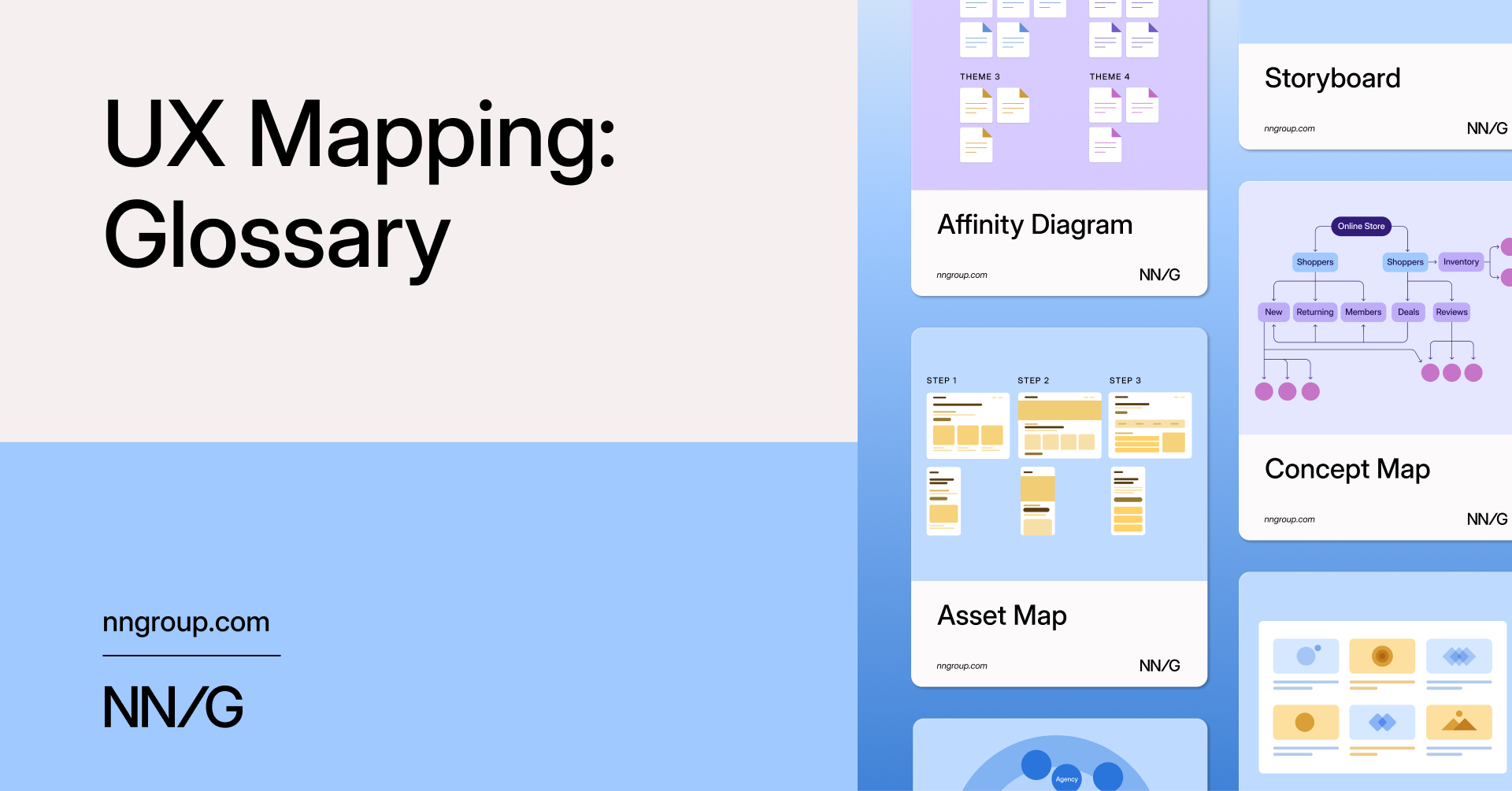
UX teams use maps to understand experiences, processes, and systems together. NN/G's glossary explains different map types and how their purposes differ. Some look similar, and people may use different names for the same thing. This can make team discussions confusing, even when everyone knows the basic format. The glossary helps readers choose a map that fits their actual goal.
Several maps show how an experience changes as a person moves through it. A journey map shows the process of reaching a goal. An experience map looks at general behavior, not one company's product or service. A service blueprint connects a particular customer journey with people, processes, and service evidence. These maps all involve time, but they explain different parts of an experience.
Other maps help teams see steps or information within a product. A user flow shows the usual or ideal steps for completing a task. A wireflow combines simple page layouts with connections that show interactions. A site map shows how the website's content is organized. These formats are related, but they do not answer exactly the same question.
Maps can also help teams organize research and understand the people involved. An affinity diagram groups information by shared themes or similarities. An empathy map brings together what the team knows about a user type. An ecosystem map shows people, organizations, and services involved in an experience. A stakeholder map helps teams consider people's power, interest, and attitudes toward a project.
Finally, some maps help teams plan work rather than describe an existing experience. A product roadmap covers future problems across the product's different functions. A field roadmap covers the problems owned by UX, while a specialty roadmap is narrower. A UX roadmap helps teams agree on priorities and communicate future work. The important choice is what the map needs to explain to others.
Key expressions
fit a goal
목표에 맞다
Choose a format that fits your goal.
bring together
한데 모으다
The map brings together what we know about users.
agree on priorities
우선순위에 합의하다
The team needs to agree on priorities before planning the work.
Generated with AI. AI can make mistakes.