

Why Products Start to Look the Same
Products can look similar because they share purposes and limits.
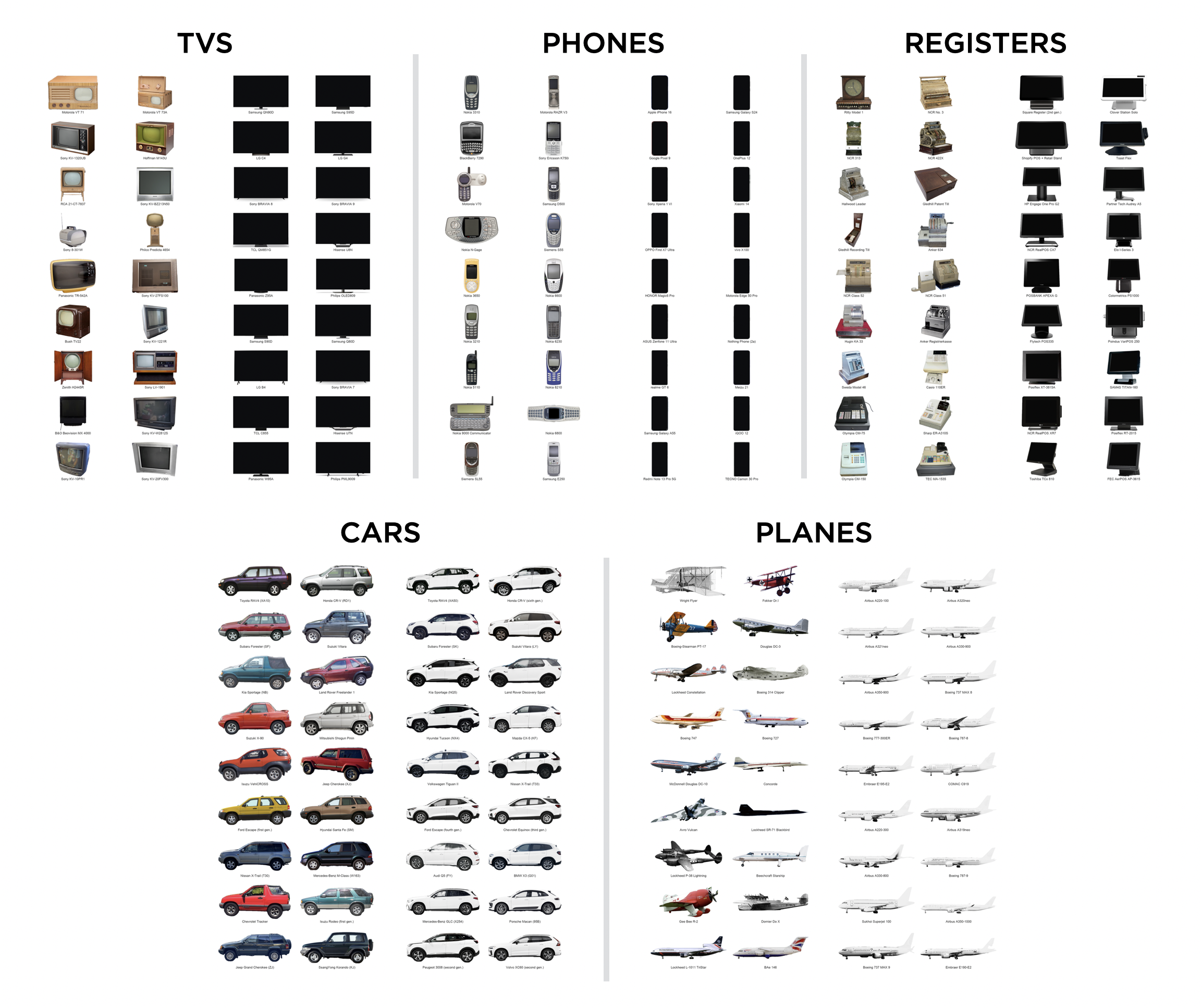
Luke Wroblewski compares old and new designs for TVs, phones, and cars. Many products in each group now look quite similar to one another. He asks why this happens as products change over time. His article presents several common explanations rather than one final answer.
A clear purpose can help explain why product designs become similar. People mainly use a TV to watch pictures on a screen. So its design can focus more on the picture itself. Smartphones and cash registers can also become simpler around their main task. Their appearance may change when other parts become less important.
Market conditions offer another explanation for the same pattern of change. When technology becomes mature, companies compete more on price and features. A very different design can be expensive and risky to produce. Smaller companies may try it, but they have fewer resources available. They can find it difficult to reach a much larger market.
Physical limits also shape the appearance of cars and planes over time. Air movement, heat, and materials affect which forms will work well. Airports create limits for planes, while safety rules create limits for cars. But a different job can lead to a very different design. An F1 car and a fighter jet show this connection clearly.
Software can move toward similar designs much faster than physical products. Wroblewski points to apps that increasingly use chat interfaces after ChatGPT's release. Hardware often took decades to move toward a shared form. AI hardware is still trying pins, glasses, earbuds, and pendants today. It remains unclear which forms will last or become widely used.
핵심 표현
look similar
비슷하게 보이다
These two products look similar.
focus on
~에 집중하다
We focus on the main task.
lead to
~로 이어지다
A different purpose can lead to a different shape.
AI를 사용해 생성되었으며, AI는 실수를 할 수 있습니다.