

When Should You Tell Readers About AI?
The PACED framework helps you decide when to explain your use of AI to readers.
An AI disclosure tells people how AI helped create a piece of content. It should be easy to see or hear with a screen reader. A small label or a short note can do this. It is different from a hidden mark that only a machine can read. Readers need an explanation they can understand without special tools.
People do not always react in the same way to these notes. Some studies found lower trust or lower ratings for quality. Others found no clear change. One review looked at 47 studies about AI and news. Only 10 of these studied the effect of telling readers about AI directly. The results did not show one clear reaction.
The kind of writing also matters to readers. People may care more about a personal letter than a routine reminder. A personal letter is meant to show care and a human connection. Readers may feel differently if AI wrote it. Editing a few sentences is also different from creating a whole article. The amount of AI help can change their reaction.
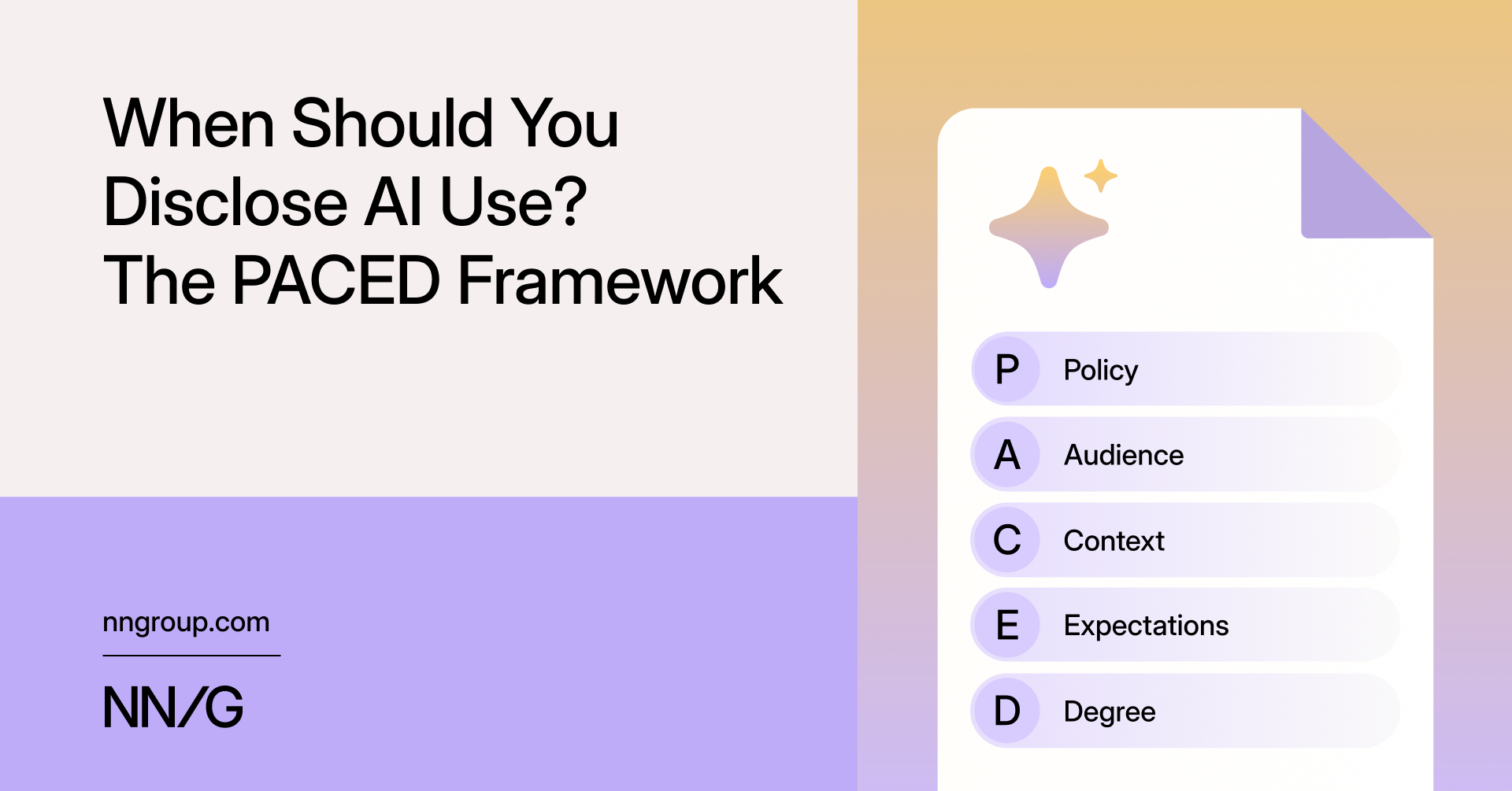
PACED gives writers five things to think about before deciding. Policy means the rules of your country, organization, or platform. Audience means the people who will read your work. Context means the purpose and situation of the message. Expectations means what readers think you should tell them. Degree means how much AI contributed to the work.
Start by checking whether a rule requires you to disclose AI use. If no rule does, think carefully about the other factors. Readers may want an honest explanation even when they dislike AI content. Some studies found that learning about AI from someone else hurt trust more. So hiding its use is not a simple answer. Explain its role with your readers and situation in mind.
핵심 표현
react to
~에 반응하다
Readers may react to the label in different ways.
think about
~을 생각해 보다
Think about what your readers expect.
contribute to
~에 기여하다
AI contributed to the first draft.
AI를 사용해 생성되었으며, AI는 실수를 할 수 있습니다.