

Use Empathy Maps to Understand Your Users
Empathy maps help teams understand users when they rely on research and stay up to date.
UX teams need to understand users and explain their needs to colleagues. An empathy map brings that knowledge together in one shared place. It can describe one person or a group with similar behaviors. Teams can use it early in design and return to it later. The map should help with decisions, rather than become a document nobody uses.
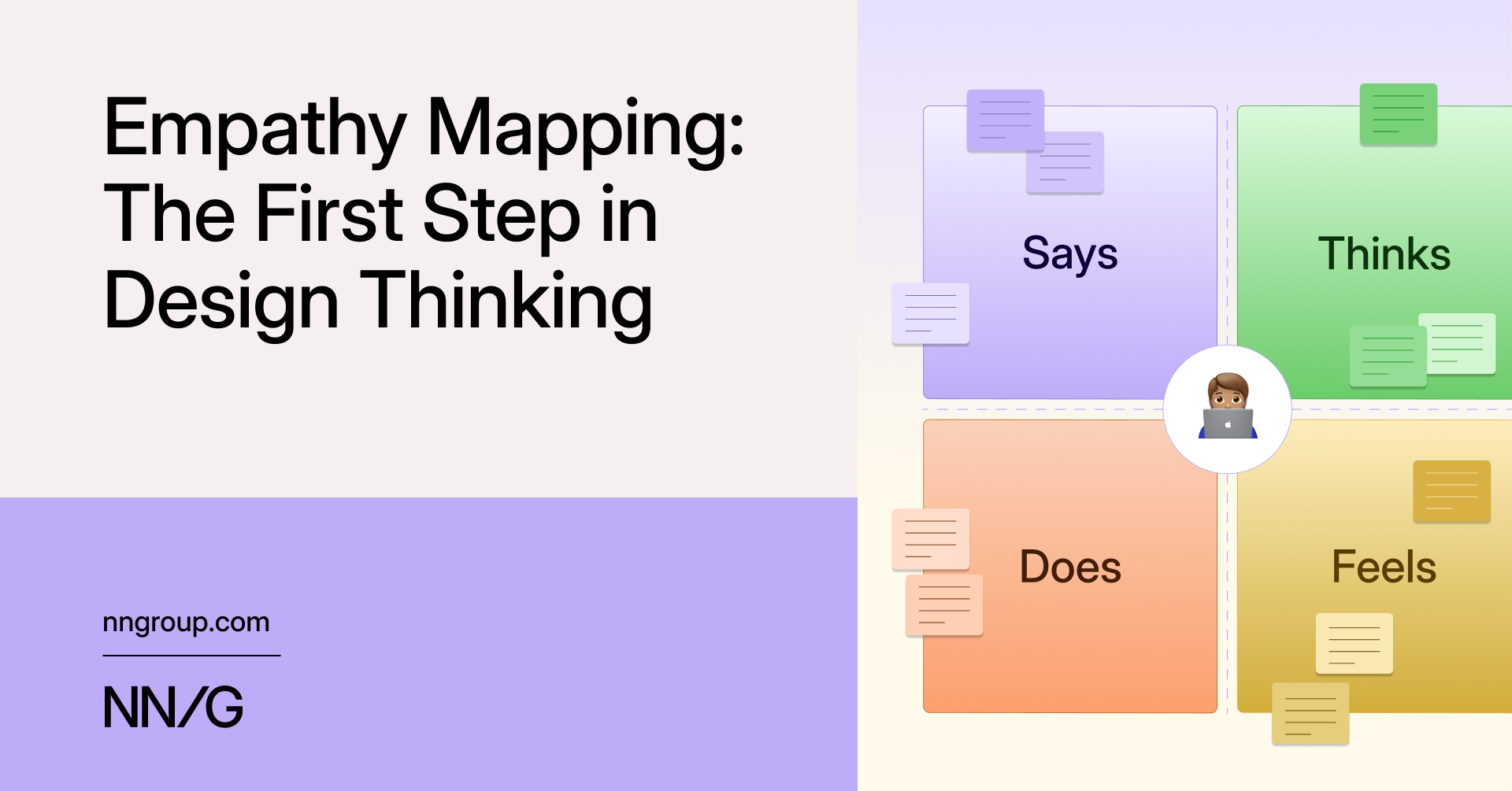
A traditional map has 4 parts: Says, Thinks, Does, and Feels. Says records the user's words, while Thinks describes their thoughts and concerns. Does shows actions, including how someone uses a screen reader or keyboard. Feels names an emotion and explains what caused it. For example, someone may feel anxious because they cannot confirm a payment. An empathy map describes a mindset, while a journey map follows steps.
Start by choosing one user or persona and a clear purpose. Then collect interviews, observations, diary studies, support tickets, or other research. Each note should connect to a specific piece of evidence. If you cannot find that evidence, mark the note as an assumption. A map made before research should show ideas that still need testing.
Team members should read the research and write their own notes first. This helps them avoid following another person's early opinion. They then share the notes and group similar ideas together. A facilitator can help everyone discuss patterns and questions. If words, actions, and feelings disagree, look into the difference. If a section is empty, the team may need more research.
Keep the map up to date as new evidence arrives. Add the user, date, version number, and questions that remain open. You can also ask participants to complete a map after a session. But compare their reported actions with what you actually observed. AI can help organize evidence, but it should not invent missing evidence. The team still needs to examine the research and make its own judgments.
핵심 표현
bring together
한곳에 모으다
We bring together the interview notes.
look into
살펴보다, 조사하다
We need to look into this difference.
keep up to date
최신 상태로 유지하다
Keep the map up to date after each study.
AI를 사용해 생성되었으며, AI는 실수를 할 수 있습니다.